


Norway’s large-scale scallop industry collapsed in the early 1990s. Intensive fishing had depleted wild stocks faster than they could replenish, and traditional mechanical dredges were tearing up the seabed and disrupting the ecosystem scallops depended on to reproduce and survive. In 1992, Norwegian authorities banned scallop harvesting entirely. The fishery sat closed for 30 years.
Then, in December 2022, it reopened. The difference was a Norwegian company called Ava Ocean, with a fundamentally different approach to getting food off the ocean floor.
I sat down with Dagny-Elise Anastassiou, Chief Impact Officer at Ava Ocean, to understand how that technology works and where the company is taking it next.
The Problem With How We Harvest
Most people don’t think much about how seafood gets from the seabed to their plate. The dominant methods, dredging and bottom trawling, drag heavy equipment across the ocean floor, pulling up target species along with everything else and leaving damage behind. Dredging is banned in Norway and Belize. In most of the world, it remains standard practice.
Ava Ocean, founded in Ålesund in 2016, built its technology around a different model. Their patented, non-invasive harvesting system uses precision identification, selection, and sorting to pick individual bottom-dwelling species without disturbing the surrounding ecosystem. No dragging or collateral damage, and lower fuel consumption since targeted harvesting means less time running the vessel.
Proof in the Barents Sea
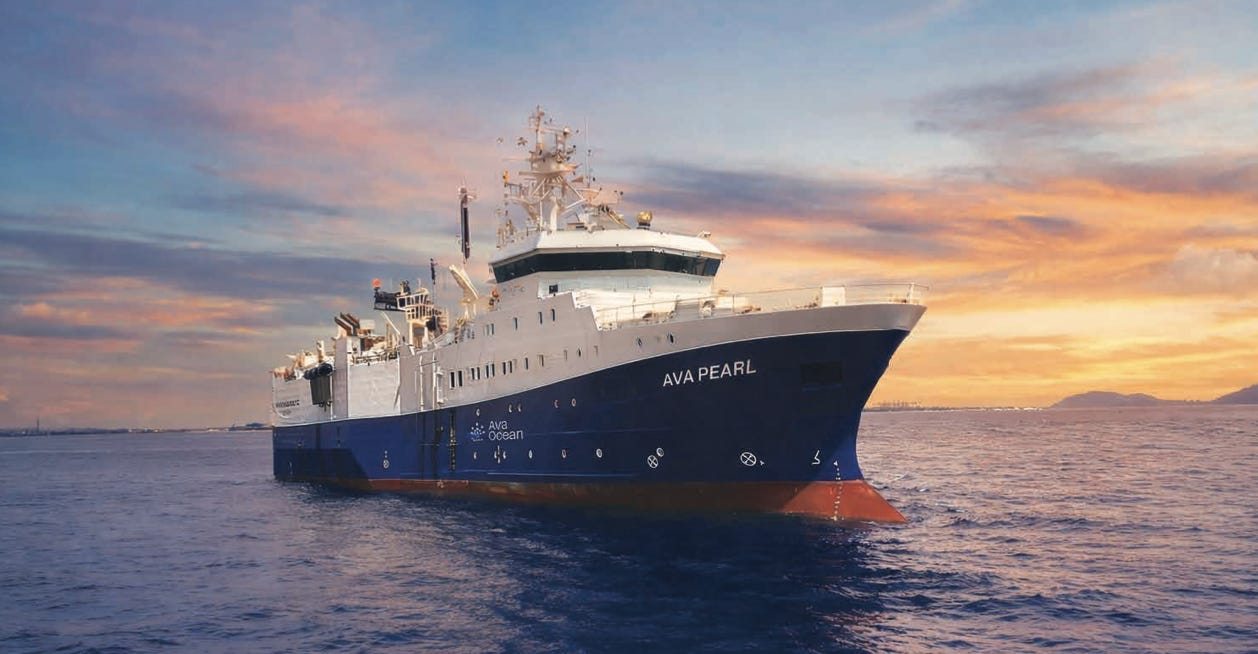
Ava Ocean’s vessel, the Arctic Pearl, became the first to carry the company’s harvesting system onboard. It was deployed commercially for Arctic scallops in the Barents Sea, and the technology’s documented low impact was what allowed the 30-year-old fishery closure to finally lift in December 2022. Precision seabed harvesting, done carefully, can restore access to resources that destructive practices had made off-limits for a generation.
Turning the Technology on Another Problem
With scallops as the foundation, Ava Ocean has adapted that same system for a different challenge. In Northern Norway, over 80% of the region’s original kelp forests have disappeared over the last 50 years. The cause was overfishing that removed the natural predators keeping sea urchin populations in check. And left unchecked, urchins ate through the kelp. What remains is the equivalent of 1 million football pitches of urchin barrens.
The response is Ocean Green, a large-scale regenerative urchin harvesting project that launched in early 2024 and runs through September 2027. It’s backed by 47 million Norwegian Krone (NOK) from Norway’s Green Platform and has been endorsed by the UN Decade of Ocean Science under its Marine Life 2030 program.
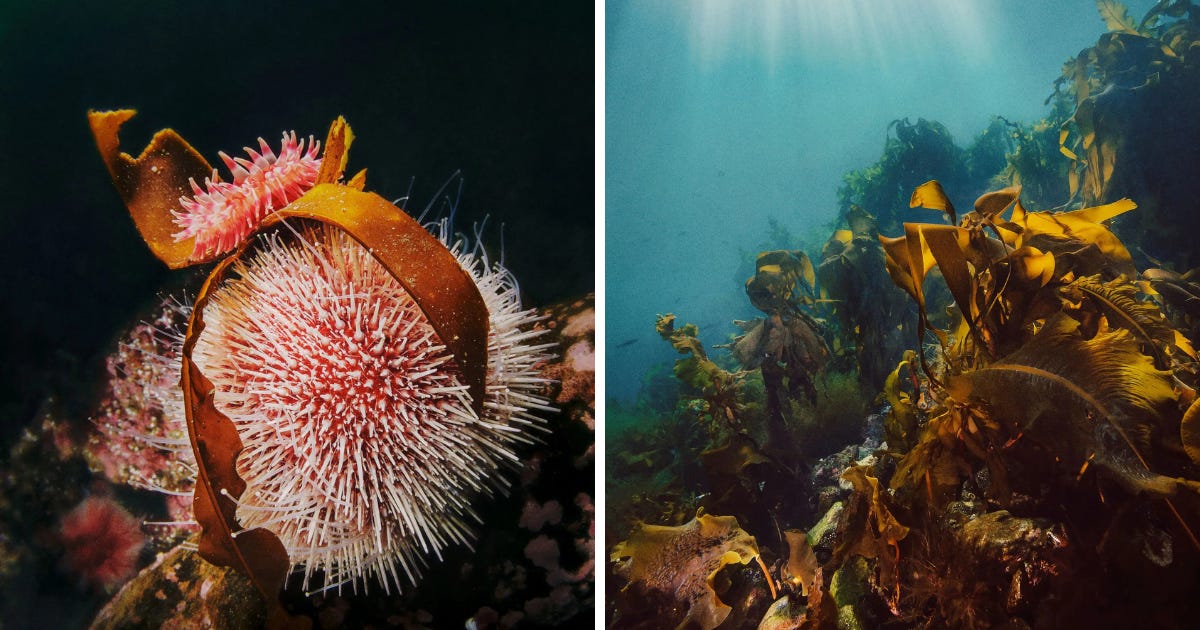
The goal isn’t to remove all the urchins. They’re native to the region and play a role in the ecosystem. The aim is to bring numbers down enough that kelp forests can return naturally. The harvesting technology is projected to pull around 768 kilograms of urchins per hour, a throughput that manual harvesting cannot match.
What Happens to the Urchins
Ocean Green is built around a zero-waste model. High-quality urchins go toward food. Lower-quality urchins are being explored for fertilizer, enzymes, biomarble, and art pigments. Revenue from the urchin fishery is estimated at approximately NOK 8 million annually based on a 240-day fishing year, and that commercial return is what makes the restoration work financially viable over time.
The broader stakes are worth noting. Kelp forests absorb CO2 at rates that exceed terrestrial forests, buffer coastlines against storm damage, and serve as nurseries for commercially important fish species. Their restoration has implications well beyond Northern Norway.
Ava Ocean has spent a decade demonstrating that there’s an alternative way to harvest seafood without damaging the seabed. The reopened scallop fishery in the Barents Sea is evidence of that. Ocean Green is the next application of the same idea.
Learn more at avaocean.no.
This article is part of a new spotlight series on Blue Tide, which tells a deeper story about the people and solutions shaping the blue economy. If you know someone who would like to be featured then send me an email.
So cool!! I’ve heard of these urchin harvesting program elsewhere but didn’t realize Norway was also getting into the game.