

Welcome back! This week we're looking at the World Economic Forum's new report on what a regenerative blue economy requires, a significant shift in ocean observation policy between the EU and the US, and a spotlight on Brackish Strategies.
Something new is coming to Blue Tide starting this Friday. Every week I talk to people doing interesting work in the ocean space, and I want to give these stories more room than a newsletter paragraph allows. From now on, expect a long-form spotlight every week. The first features a company rethinking how we harvest scallops, and it goes out this Friday.
Congratulations to The Ocean Connections on their launch in Miami this World Oceans Day. They're the first cultural platform dedicated to Blue Storydoing, a methodology that moves beyond traditional storytelling to combine science, data, and tangible outcomes. Learn more here.
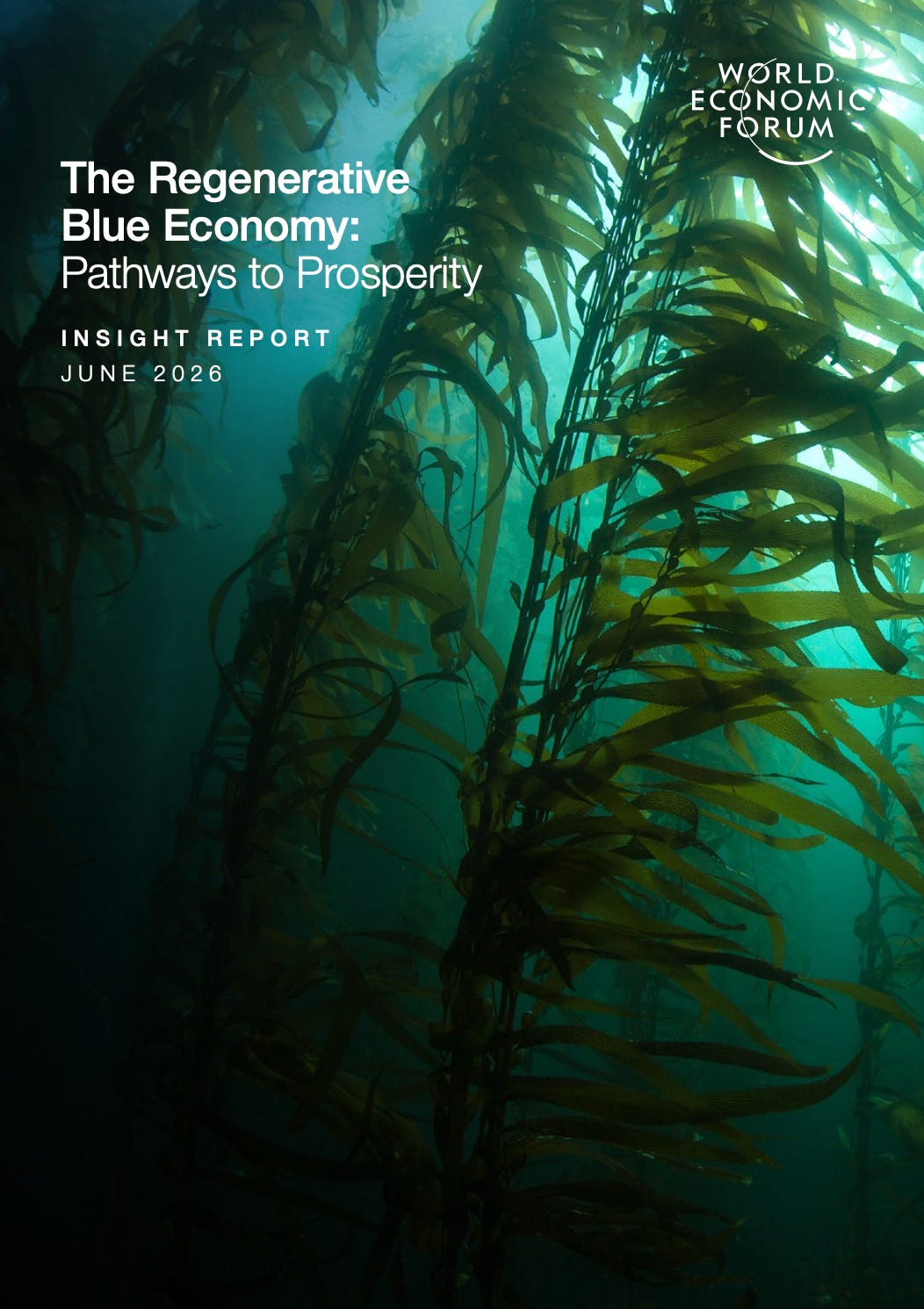
🌱 WEF makes the case for a regenerative blue economy
The World Economic Forum published a new insight report this month making the case that sustainability alone is not enough for the ocean economy. Where sustainability focuses on reducing harm and maintaining the status quo, a regenerative approach goes further by actively restoring what has been lost. The report argues that most ocean industries are still operating within already degraded systems, and that the goal must shift from doing less harm to doing more good, rebuilding marine ecosystems and coastal communities rather than simply slowing their decline.
The report identifies four levers needed to unlock this shift, including governance, finance, human capacity, and technology and AI. On finance, it notes that less than 1% of the ocean economy’s estimated annual value has been invested in its sustainability over the past decade, while harmful subsidies continue to flow. The report states that the tools to change this already exist, from blue bonds and debt-for-nature swaps to community-led finance models, and that what is missing is the coordinated architecture to make regenerative finance the norm rather than the exception.
📡 EU ramps up ocean observation as US scales back
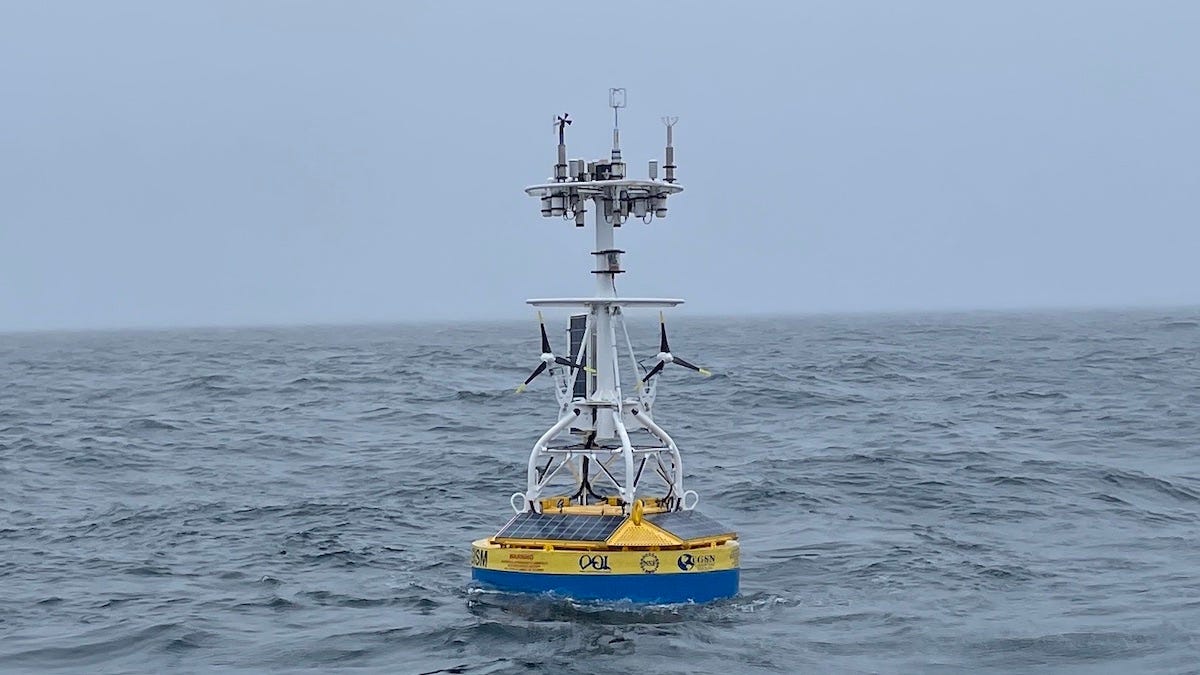
The European Commission recently launched Ocean Eye, a new ocean observation program pitching itself as a free, open-access global data resource, with a goal of providing 35% of the global ocean observation system by 2035. The announcement comes as the Trump administration dismantles the National Science Foundation’s Ocean Observatories Initiative, a decade-old network of data buoys tracking ocean temperature, chemistry, wave conditions, and ecosystem health across the Pacific and Atlantic. Four of the five arrays are set to be removed by September 2027, representing roughly $370 million in specialized equipment.
The US network was notably open-source, giving scientists at smaller institutions access to continuous deep-sea data without needing expensive research vessels. And fishing communities on the Pacific Northwest coast have already begun losing the real-time safety and ecosystem data they relied on for their daily operations at sea. The EU's Ocean Eye, currently funded at $92 million, is significantly smaller and will use a mix of deep-sea sensors, satellite imagery, and autonomous marine robots. The EU has called on other countries to contribute, noting that no single nation can observe the ocean alone.
🪸 Spotlight on Brackish Strategies
Despite the ocean economy being valued at more than $3 trillion, private climate tech finance flowing into ocean technologies remains a fraction of what the sector warrants. Brooke Lynn Elzweig founded Brackish Strategies in November 2024 to bridge that gap, bringing the technical grounding of a marine scientist with a deep understanding of capital, commercialization, and how sectors connect.
Brackish Strategies is a boutique advisory firm working with growth-stage ventures in coastal resilience, water infrastructure, and climate-enabling materials. The firm takes its name from the brackish zone, the estuarine environment where salt and fresh water converge and one of the most productive ecosystems on earth, applying that same logic to business by helping founders sharpen their positioning and get in front of the right capital with the right framing.
(Brooke and I are working on a long-form piece together exploring commercialization in the blue economy. Stay tuned.)
Learn more about Brackish Strategies here.
That's it for this week. If you have a story, company, or initiative you'd like to see featured, reach out.