

Welcome back! This week we’re looking at the key themes that emerged from the Blue Economy and Finance Forum in Monaco, a US Senate subcommittee hearing that examined opportunities and challenges across seafood, shipping, ocean technology, and coastal communities, and Time Magazine’s annual ocean issue, which this year asked whether private capital can save the ocean.
🇲🇨 Key themes from the BEFF in Monaco
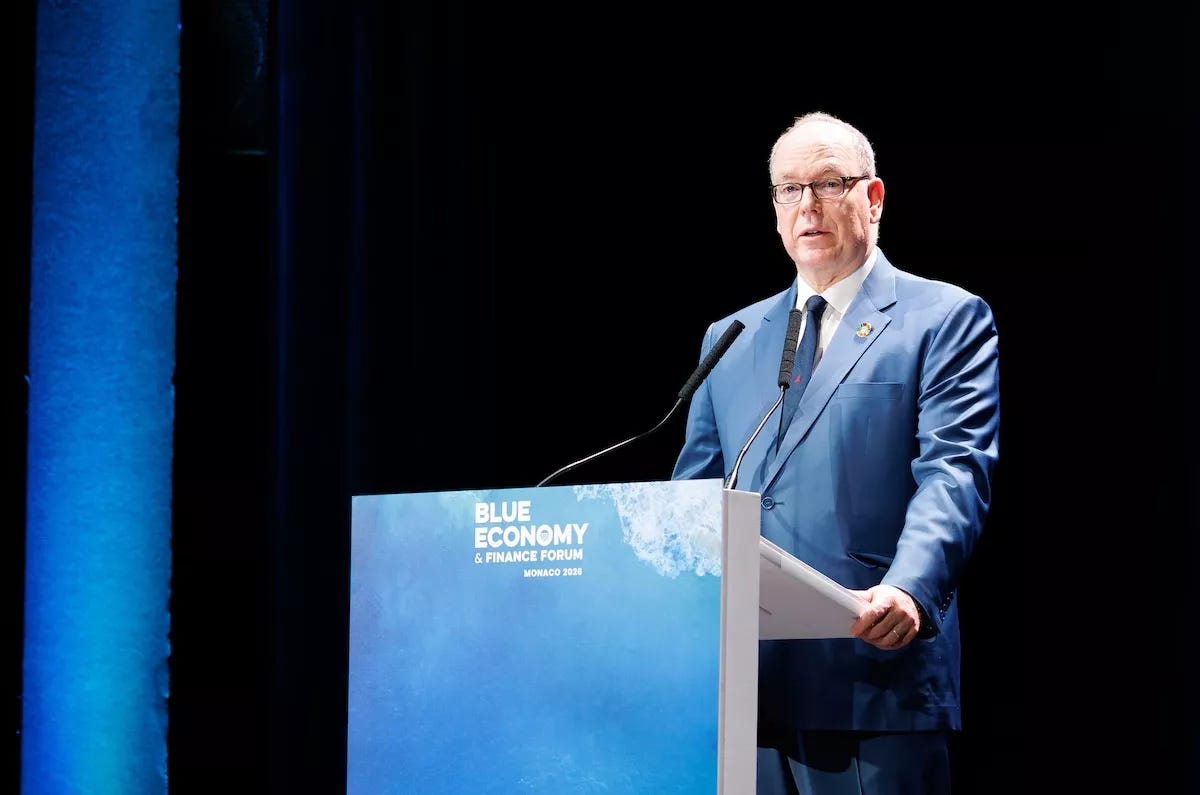
The Blue Economy and Finance Forum held its second edition in Monaco on May 28 and 29, drawing world leaders and private investors to make the case that ocean investment has moved well beyond philanthropy. Prince Albert II opened with a direct challenge to attendees, arguing that the question of whether the ocean is investable has been settled and that the task now is deploying capital at scale.
The forum’s broader message was that ocean finance is maturing structurally, not just in ambition. While the ocean economy generates $2.5 trillion annually, sustainable financing currently sits at around $150 billion, a gap driven not by lack of investor interest but by the absence of common standards and de-risking mechanisms. Financial modeling presented at the event suggests upwards of $550 billion could be deployed into sustainable ocean sectors by 2030.
🏛️ US hearing on the blue economy
On June 2, Senator Dan Sullivan of Alaska chaired a Senate Commerce Subcommittee hearing on the blue economy, examining opportunities and challenges across seafood, mariculture, tourism, shipping, and ocean technology. It’s a signal that the sector is gaining serious legislative attention at the federal level. In his opening statement, Sullivan noted that the blue economy generated more than $470 billion in goods and services and supported 2.4 million jobs in 2022, describing it as one of the fastest growing sectors in the American economy.
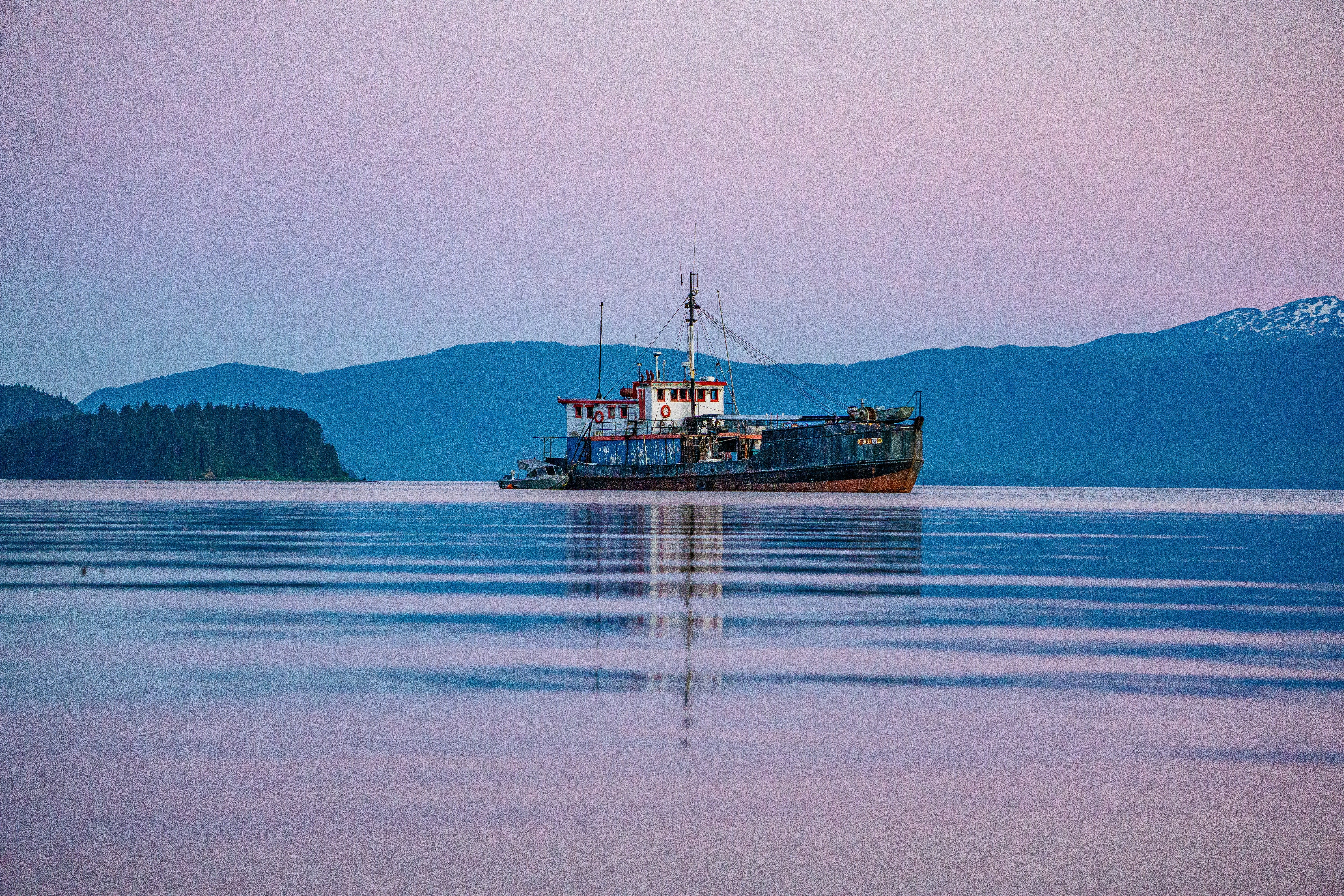
The hearing placed particular emphasis on Alaska, which harvests over 60% of America’s commercial seafood and holds more coastline than the rest of the country combined. Key themes included workforce shortages across maritime industries, the threat of illegal and unreported fishing, and the need for sustained federal investment in ports, infrastructure, and science. Sullivan also highlighted progress on several pieces of legislation, including the FISH Act targeting illegal foreign fishing and a forthcoming bycatch bill he described as the most comprehensive in American history.
🌊 Time Magazine examines the case for ocean investment
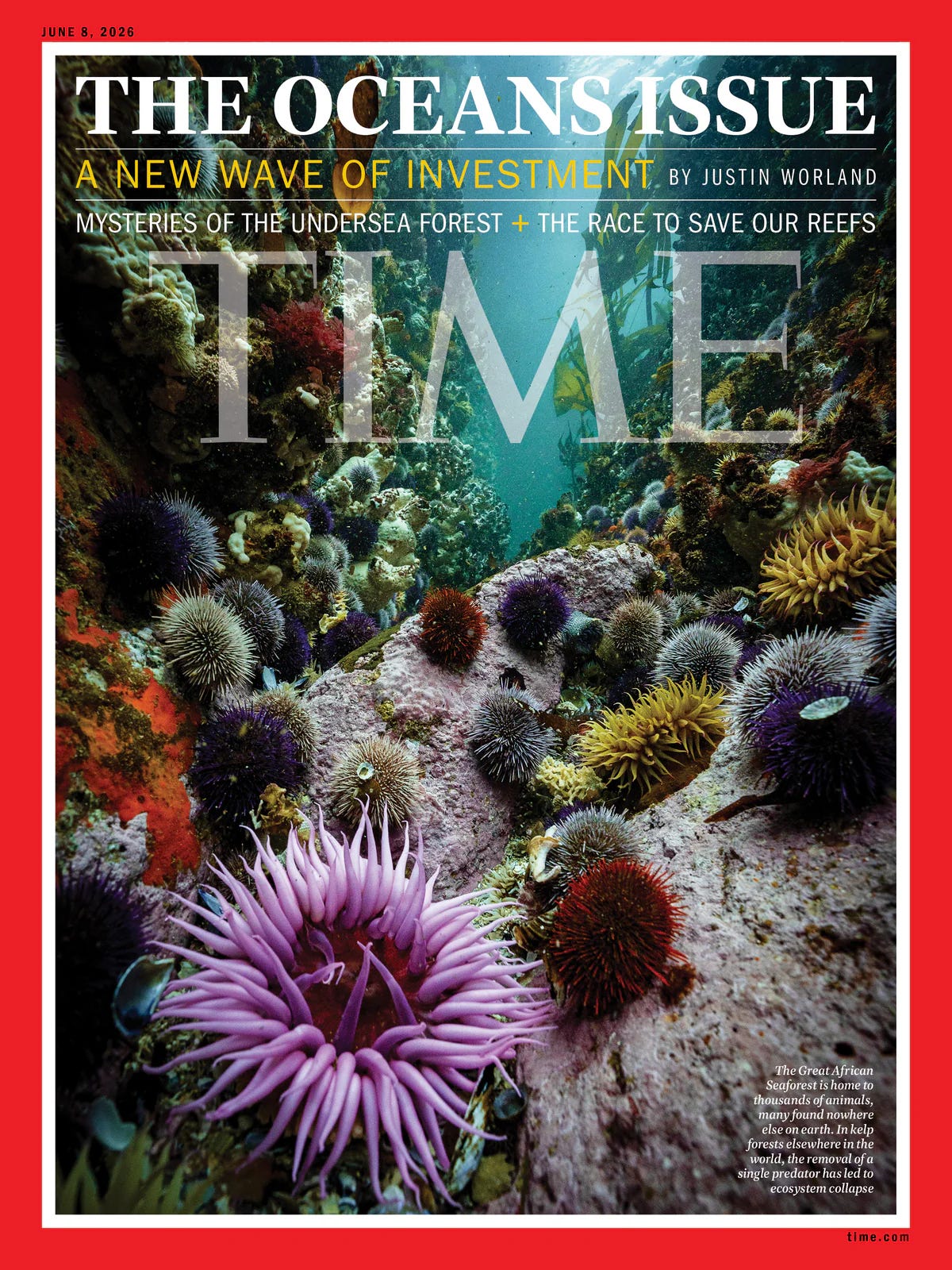
Time Magazine dedicated its annual ocean issue this year to a question the industry is actively wrestling with: can private capital save the ocean, and should it have to? The piece profiles founders building at the intersection of ocean protection and commercial viability, from seaweed-based packaging to coral reef restoration to microplastic filtration, making the case that profit motive and ocean health are no longer mutually exclusive goals.
The piece is honest about the tensions. Private capital is flowing in, but investors often lack ocean expertise, and the first wave of ocean investment funds are only now reaching maturity. Some companies benefiting most are those with dual commercial and defense applications, particularly ocean monitoring and mapping. The article closes with a pointed observation that big capital will not flow at the scale needed until governments change how they frame ocean health, not as an environmental concern but as an economic necessity.
That's it for this week. If you have a story, company, or initiative you'd like to see featured, reach out.