


Welcome back. This week we’ll take a look at a benchmark for ocean-focused investing, a $23.5 billion problem hiding in plain sight, and a shipbuilder that makes others look slow.
📈 The blue economy financial index outperforming the S&P 500
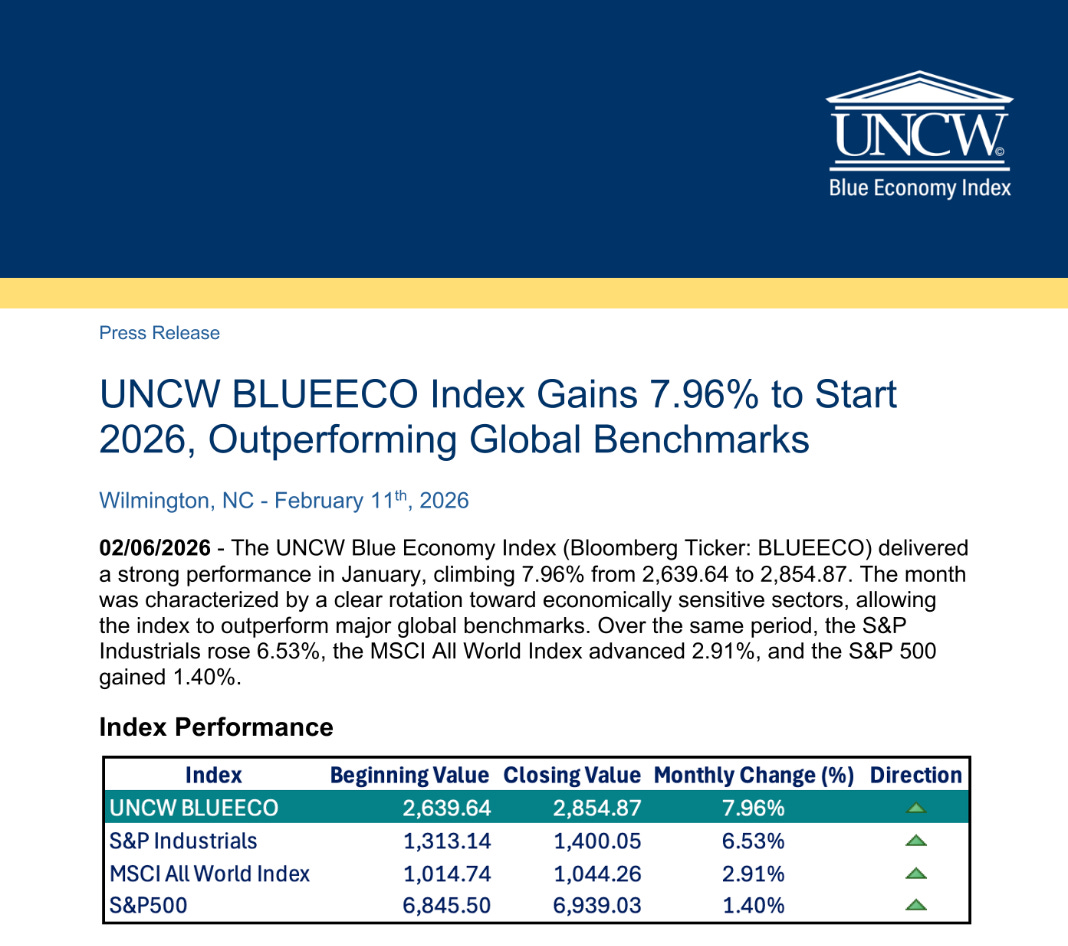
While broader markets have had a choppy start to 2026, a blue economy-focused financial index is riding a wave of growth, outpacing the S&P 500.
The Blue Economy Index ($BLUEECO), created by the University of North Carolina Wilmington and tracked on the Bloomberg Terminal, measures the performance of top companies operating sustainably in ocean and waterway sectors.
Ocean tech has struggled to attract the institutional capital that flows freely into other sectors like AI and cleantech, partly because the asset class has lacked the benchmarks and visibility that investors need to feel confident.
A dedicated financial index helps change that. It creates a trackable, comparable entry point, and when it outperforms, it makes investors notice. Worth watching closely as more capital looks for credible ocean-aligned vehicles.
🐟 Illegal fishing drains $23.5bn from the global economy every year
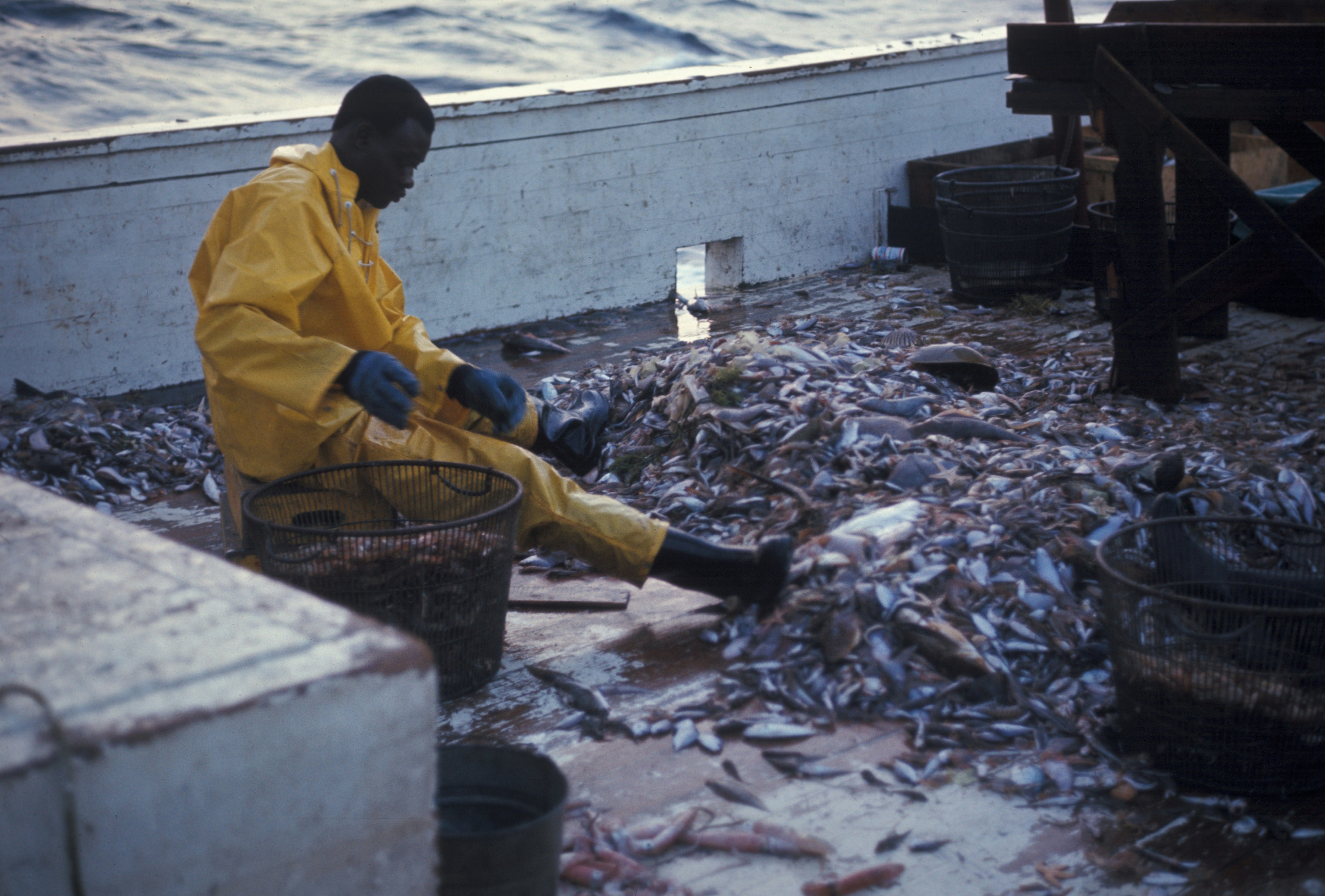
At the World Ocean Summit in Montreal last week, it was reported that roughly a third of the seafood on our plates comes from illegal, unreported, or unregulated fishing, a practice that drains ~$23.5bn from the legal economy annually.
The message shared was clear — without stronger monitoring, legal enforcement, and financing mechanisms, commitments to protect 30% of the ocean by 2030 will remain just that, commitments.
Papua New Guinea's Minister for Fisheries shared that it’s “easier to pinpoint someone in Tehran and bomb them” than it is to monitor our own ocean. That’s a striking statement to make.
Hopefully this changes with the rapid growth in new ocean technologies being built.
👨🏻🏭 Saronic is building autonomous vessels faster than anyone expected
Texas-based Saronic Technologies is building autonomous surface vessels, and doing it at a pace that’s drawing attention well beyond the defense sector.
In December, the US Navy awarded Saronic a $392 million production contract for its Corsair autonomous surface vessel. Secretary of the Navy John Phelan noted that Saronic went from prototype to production in under a year, a timeline that stands in sharp contrast to the procurement cycles the defense industry is typically known for.
Meanwhile, at Saronic’s shipyard in Louisiana, two Marauder vessels — larger, 150-foot platforms designed for extended range and heavy payload — are nearing completion, having gone from initial design to full vessel development in six months. A third is already underway.
Saronic’s vessels are built to operate without a crew, launching from ships or smaller craft, navigating independently, and configured for what the mission demands.
Fast-built, autonomous, scalable maritime platforms have implications that stretch well beyond defense. Monitoring vast ocean territories to catch illegal fishing, as mentioned in the previous story, is exactly the kind of problem they could help solve.

That's it for this week. I recently started working part-time with clients in ocean tech, focused on building brand awareness through content and social media. If you're interested in working together, book a call, it would be great to connect.