

Welcome back to Blue Tide! This week I'm sharing a recap of Seaworthy Collective's Startup Showcase, which I attended and covered for Refresh Miami, alongside two stories about technology being used to make the ocean safer, for ships and for whales.
⚓ Seaworthy Collective's Startup Showcase put South Florida's BlueTech scene on full display
Seaworthy Collective hosted its 7th Startup Showcase, bringing together local ecosystem members to meet the latest cohort from its flagship accelerator program, developed in partnership with NOAA through The Continuum with a focus on ocean data technologies. Since launching, the Miami-based nonprofit has supported 111 entrepreneurs, educated more than 5,600 people on BlueTech, and helped its community raise over $34 million in grants and investments.
The seven startups in Cohort 7 span seafloor mapping, seafood traceability, coastal safety, marine waste, and environmental data, reflecting how broadly the BlueTech sector is defining itself. Seaworthy Collective is also exploring the development of an investment fund and expanding its programming to Tampa Bay with support from JPMorgan Chase.
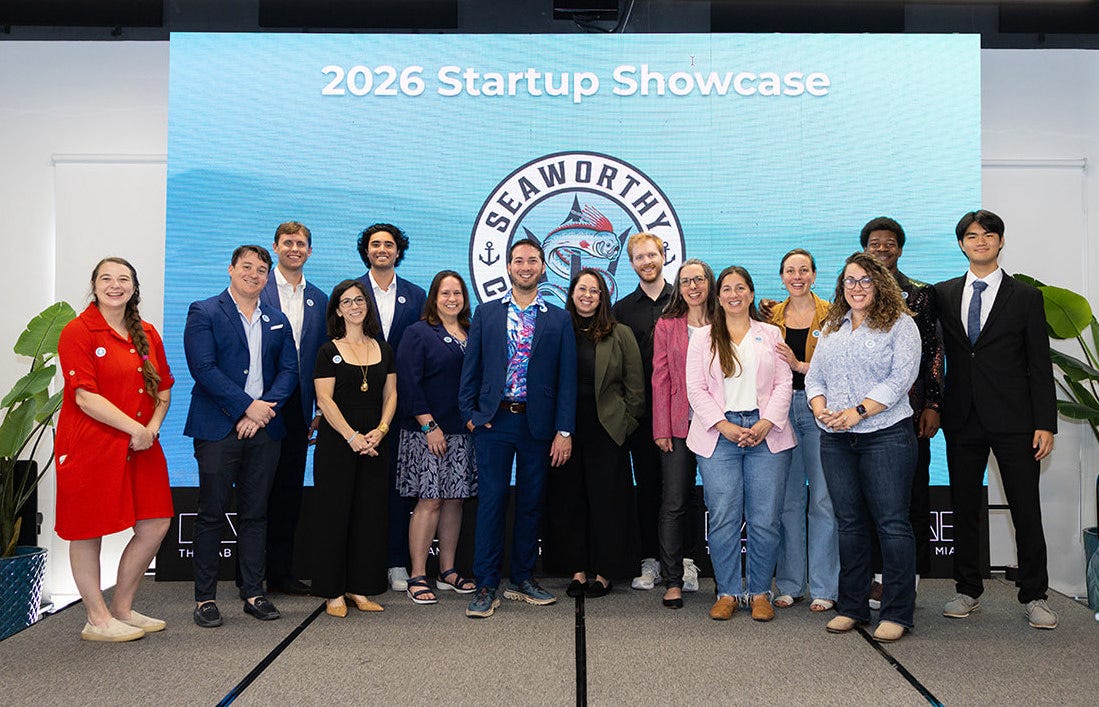
I attended the event and wrote a full recap for Refresh Miami. Read it here.
🚢 Quartermaster raised $43 million to make the oceans more visible
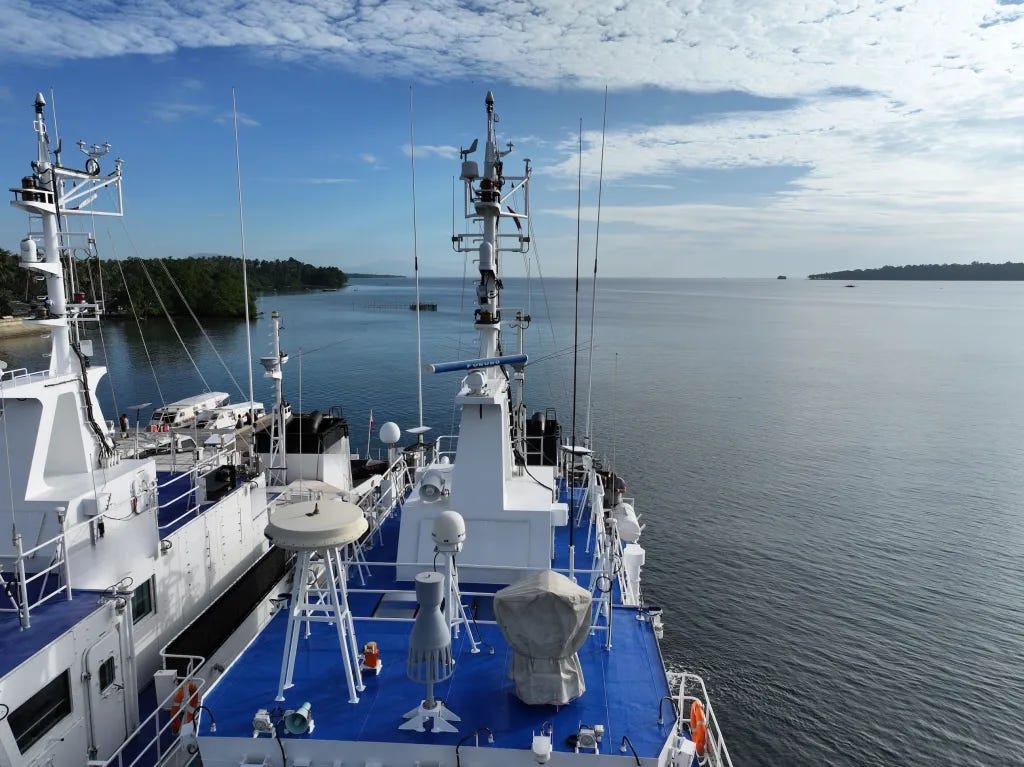
Most ships today rely on a tracking system called AIS, which works by letting vessels self-report their location. The problem is that it’s opt-in, manually entered, and easy to spoof, making it unreliable for detecting smuggling, sanctions evasion, or anything else happening on the high seas. Quartermaster, an Arlington-based startup, is building a replacement it calls SmartMast, a weather-hardened package of cameras, radios, and sensors that mounts on a ship’s mast and feeds real-time data into an analytics platform, creating what the company describes as a continuous, distributed sensing network across the world’s oceans.
The company has raised a $43 million Series A co-led by First Round Capital and Quiet Capital, and says more than 600 ships using SmartMast have already covered 10 million square miles of ocean. The primary use cases include identifying vessels, collecting training data for marine autonomy, supporting government intelligence, and aiding scientists and robotics researchers. SmartMast-equipped ships have also assisted in over 20 rescues of mariners at sea, a signal of how broadly the technology can be applied once the infrastructure is in place.
🐋 How tech is protecting gray whales in one of America's busiest bays
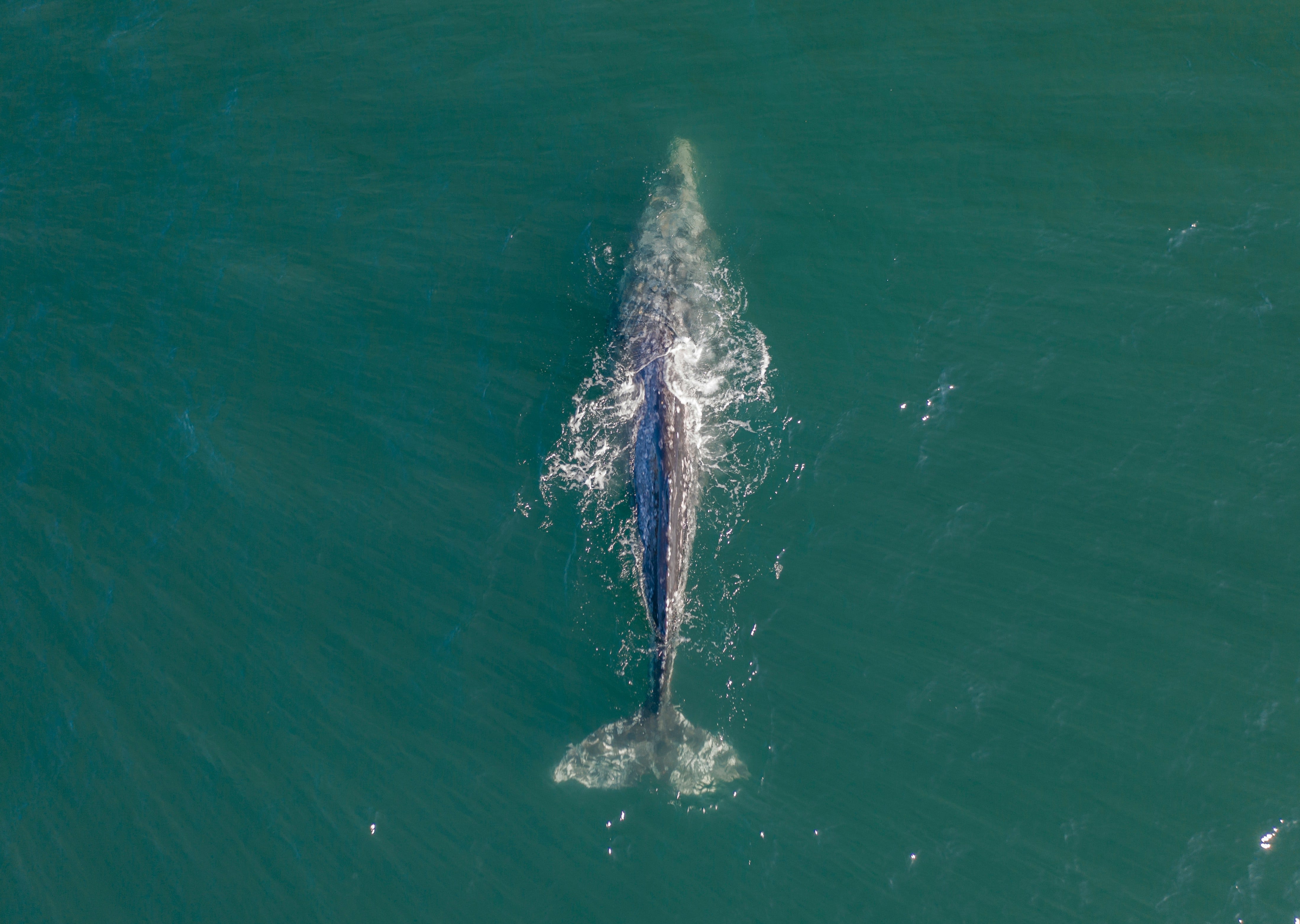
Gray whales are increasingly stopping in San Francisco Bay during their 16,000-kilometer migration from Alaska to Mexico, drawn in by hunger as climate change disrupts their Arctic food chain. The population has declined from around 20,500 in 2018 to about 14,500 in 2023, and in 2025 alone, 21 whales were found dead in and around the bay, two-fifths of them from ship strikes.
Woods Hole Oceanographic Institution spent 15 years developing a solution, now commercialized through a company called WhaleSpotter. Thermal cameras detect whales up to 7 kilometers away by identifying the slight temperature difference between a whale and the surrounding water, and once a researcher confirms the detection, nearby vessels receive an alert to slow down or reroute.
That's it for this week. If you have a story, company, or initiative you'd like to see featured, reach out.