


Welcome back! This week we're looking at the latest data on the blue economy startup ecosystem, a new charging system that could keep electric ships powered without returning to port, and why the country that created the first blue bond thinks the world needs more of them.
If you're a founder or operator in the ocean and climate tech space and want to learn how to use content marketing to grow your business, I'm hosting a free session this Thursday. Register here.
🌊 1000 Ocean Startups updated map of the ecosystem
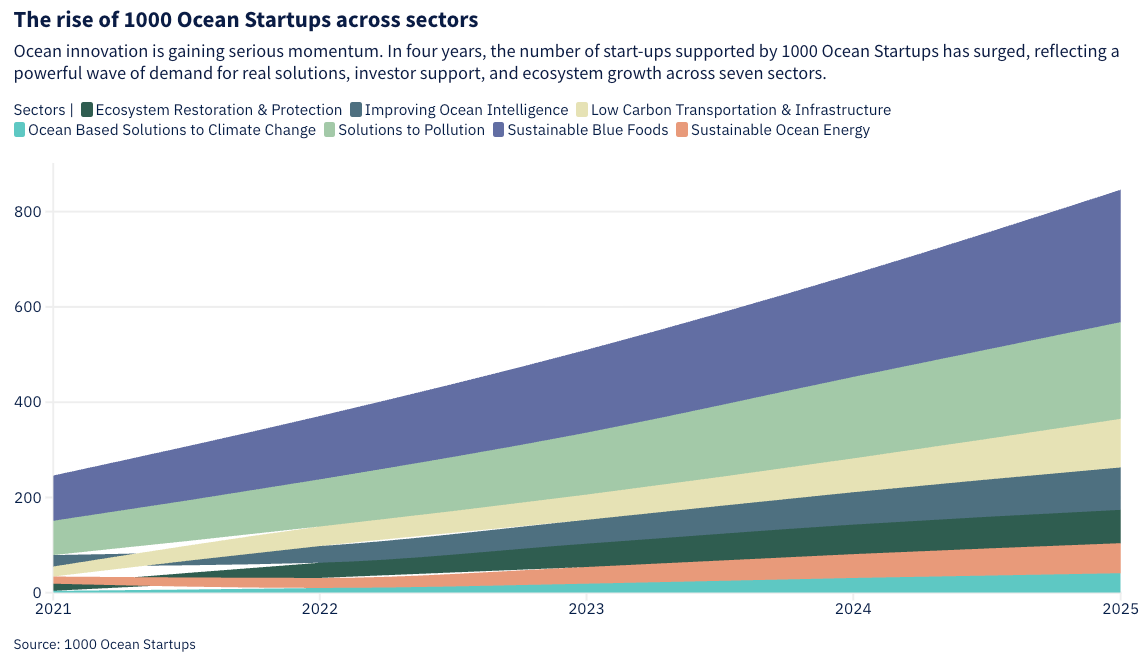
1000 Ocean Startups is a World Economic Forum-hosted coalition of over 65 organizations, including accelerators, venture capital funds, and family offices, working together to support ocean-focused startups around the world. Their newly updated report tracks the state of the ocean innovation ecosystem, and the numbers show meaningful growth. The coalition has now supported over 850 startups with a combined estimated valuation of at least $12 billion, and its geographic reach has expanded from 35 countries in 2021 to 67 countries in 2026.
The report finds that sustainable blue foods is the most mature sector by stage of company development, while ocean intelligence and ecosystem restoration are still heavily concentrated at the early stage. The US and Europe remain the largest hubs, with the biggest startup concentrations in the US, Norway, the UK, Australia, and Canada, alongside growing activity in Kenya, Nigeria, and Israel. The coalition’s goal is to reach 1,000 supported startups by 2030.
🔋 Electric ships could soon charge while at sea
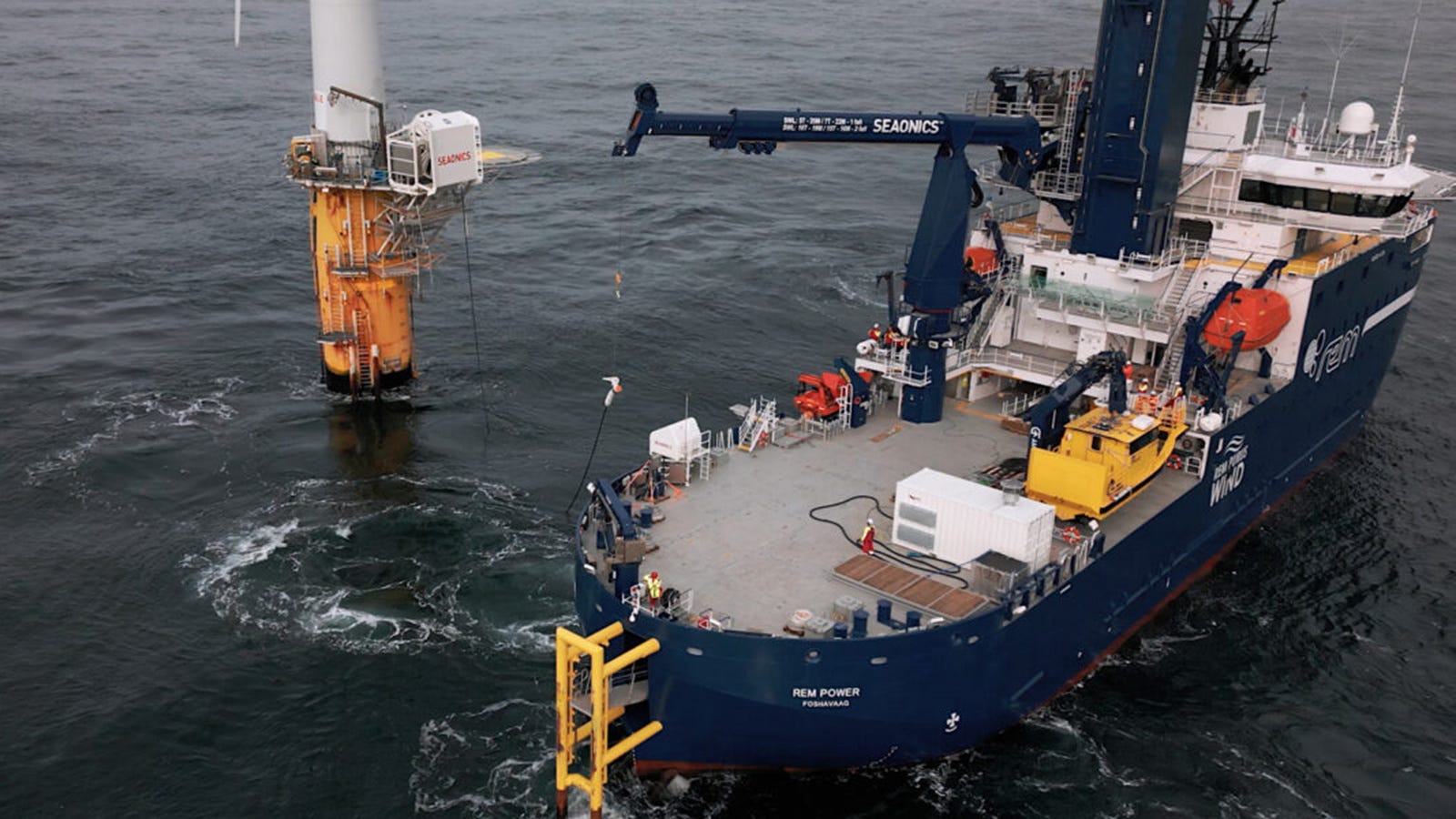
Charging an electric ship currently means sailing back to port, which can drain a significant portion of the battery before any work gets done. Researchers at SINTEF, a Norwegian research organization, have developed a magnetic charging system that could change that. Instead of a physical cable connection, which corrodes quickly in salt water, the system uses two coils that transfer power through magnetic fields when brought close together, one attached to a charging source like an offshore wind turbine, the other mounted on the ship.
The researchers describe the connection as similar to placing a cup in a cup holder, requiring no precise alignment and no exposed metal. The primary use case is service vessels that maintain offshore wind farms, which would be able to recharge directly at the turbines they service rather than making the trip back to shore. If the technology proves out at scale, it could point toward a broader shift in how electric vessels operate at sea, reducing one of the key practical barriers to wider adoption in commercial shipping.
🇸🇨 Seychelles calls for more blue bonds
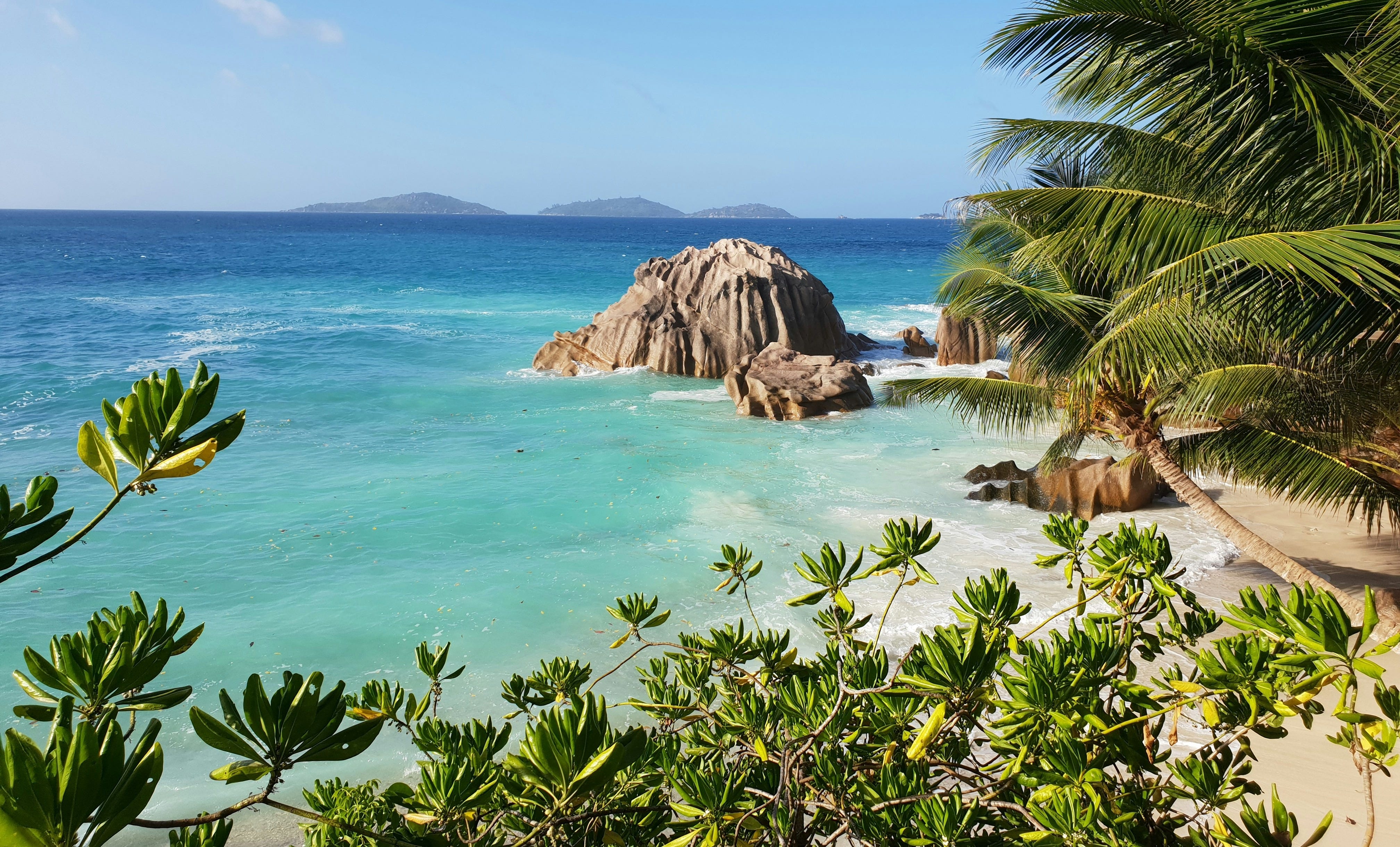
A blue bond works like a regular government bond, except the money raised is specifically earmarked for ocean conservation and sustainable fisheries. Seychelles launched the world’s first in 2018, raising $15 million from private investors to fund marine protected areas and fisheries management. Writing ahead of next month’s Global Environment Facility meeting in Uzbekistan, former Seychelles President James Alix Michel argues the instrument needs to be adopted more widely, particularly by other small island nations that depend heavily on the ocean for their economies.
His case is straightforward: countries like Seychelles often carry high levels of national debt while relying on marine resources for a large share of their income, making ocean health a financial issue as much as an environmental one. The blue bond model gives these nations a way to attract private investment for ocean protection at terms that traditional aid programs typically cannot offer.
That's it for this week. If you have a story, company, or initiative you'd like to see featured, reach out.