


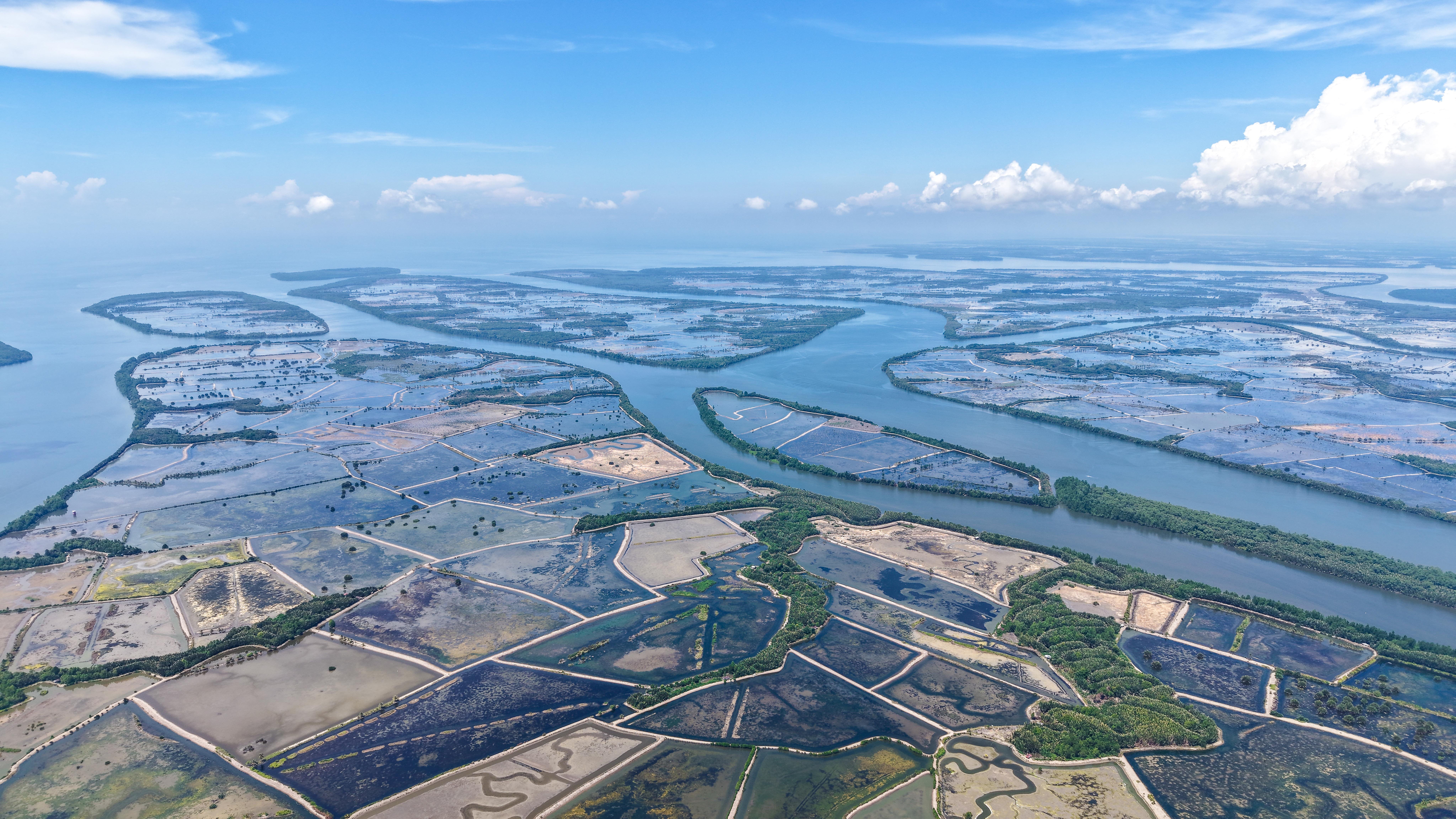
Kalimantan holds some of the largest mangrove forests in the world. Much of it disappeared during the shrimp farming boom of the 1980s and 90s, when producers across Southeast Asia cleared coastal mangroves to build aquaculture ponds. Around 1.9 million hectares of mangroves, close to 30 percent of the global total, were lost during that period. In North Kalimantan alone, roughly 150,000 hectares were cut down for ponds.
The mangrove loss didn’t just harm the coastline. Data from Blueyou, the aquaculture and fishery company behind the Selva Shrimp program, shows it also lowered how much the ponds themselves could produce, and left farmers more exposed to feed and electricity costs.
I spoke with Jonas Walker, General Manager of Blueyou Impact and Head of Aquaculture, about how the program is aiming to reverse that.
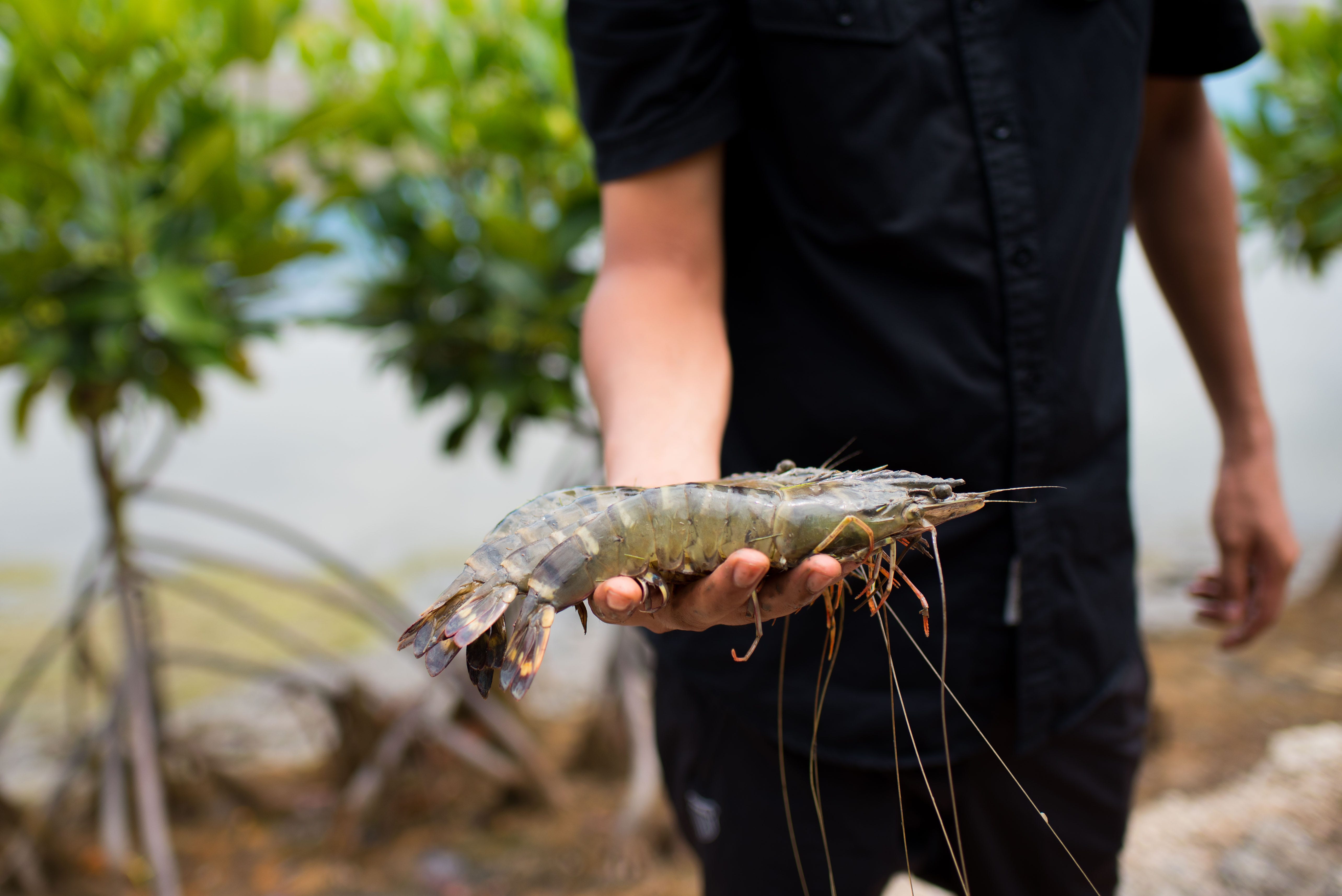
A Model Built on Restoration
Blueyou operates through two arms. Blueyou Impact develops and runs the aquaculture and fishery projects on the ground, often starting with grant or philanthropic funding from organizations like IUCN and UNIDO. Blueyou Trading then sells the resulting seafood, with revenue eventually covering the cost of running the program without further outside funding.
Selva Shrimp applies this structure to Integrated Mangrove Aquaculture, a farming method that reintroduces mangrove trees into existing shrimp ponds. The ponds are extensive and low density, with no added feed. Shrimp, crab, and fish grow on whatever the ecosystem itself produces.
That’s exactly why removing mangroves can do even more damage than it looks like on the surface. It strips out the habitat structure the ponds rely on, lowers water quality, and cuts off the natural feed supply that shrimp, crab, and fish depend on. Restoring the mangroves brings all of that back, and the productivity follows with it.
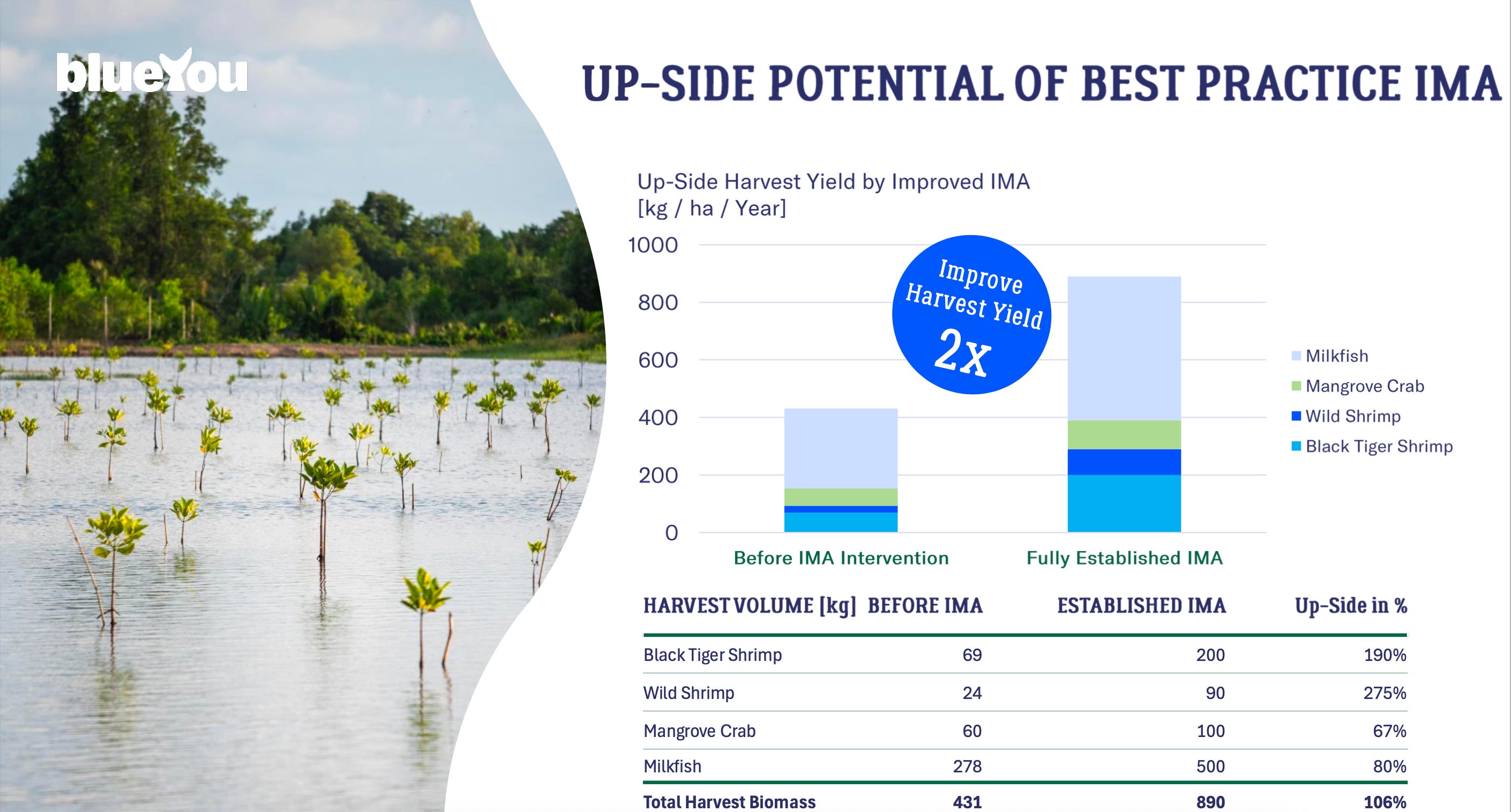
How Mangroves Impact Yield
Blueyou’s data from established Integrated Mangrove Aquaculture ponds shows the scale of that effect. Comparing harvest volumes before and after restoration, total biomass per hectare rose from 431 kilograms to 890, an increase of 106 percent. Individual species gains varied. Wild shrimp rose 275 percent, black tiger shrimp 190 percent, milkfish 80 percent, and mangrove crab 67 percent.
A pond producing several species instead of one also gives farmers a buffer. If, for example, the shrimp market declines, income from crab or fish can absorb part of the loss. Combined with a system that needs no purchased feed or electricity, since ponds are filled and drained using tidal flow instead of pumps, farmers face fewer upfront costs and less exposure to a single commodity price.
Two Decades of Precedent
Blueyou already runs a comparable program in Vietnam, where the model has been active for around two decades across 3,352 farms covering nearly 17,700 hectares. There, government agencies handle reforestation directly, and Blueyou manages the aquaculture side. Kalimantan is structured differently. Because Indonesia’s ponds are on private farmland, restoration happens pond by pond, with Blueyou working directly with farmers through field training and on-site replanting.
The Indonesia program began in 2018 and currently covers roughly 400 hectares of pilot area across 35 participating farmers, with about 280 hectares of mangroves restored so far. Degraded ponds in the region have historically produced two to four times less than comparable systems in Vietnam, a gap Blueyou attributes to a combination of farming practices and the scale of mangrove loss in the area.
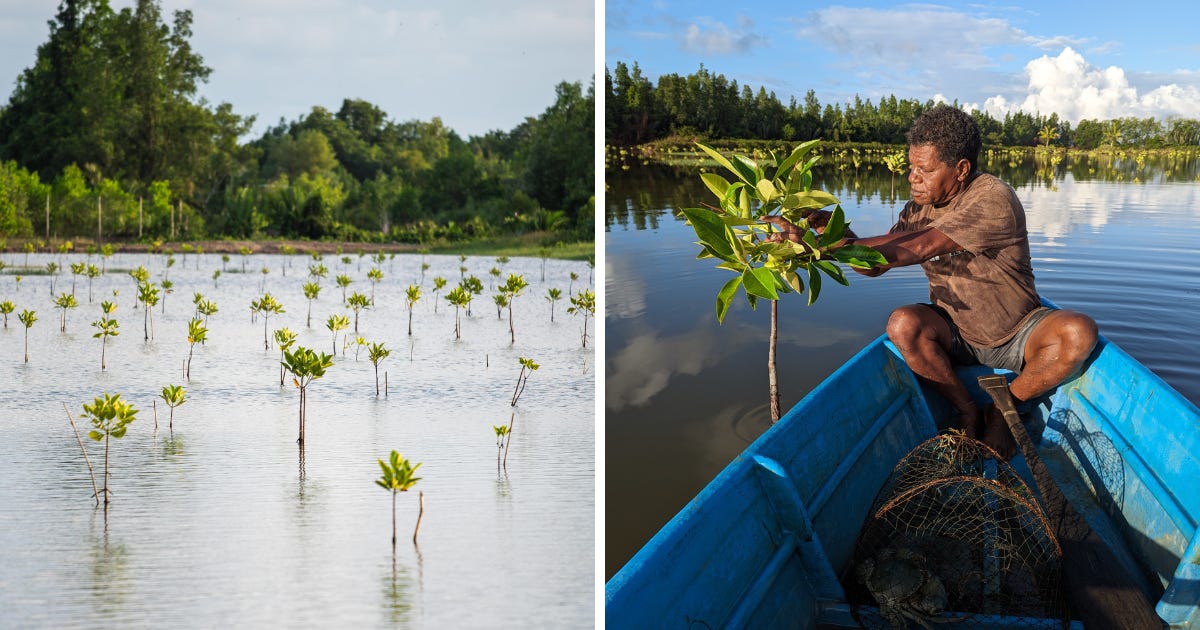
Building the Case for Scale
Blueyou’s goals for 2026 through 2030 center on two things. The first is generating reliable data on how Integrated Mangrove Aquaculture affects carbon sequestration, farmer livelihoods, and biodiversity, categories where public data is currently limited. The second is developing a verified blue carbon project covering 5,000 hectares in Kalimantan, intended to attract the financing needed to expand further.
The stated ambition is for Selva Shrimp to function as a reusable blueprint, with data and methodology made publicly available so other project developers can apply it elsewhere. Blueyou estimates the addressable opportunity at around 250,000 hectares of degraded coastal land in Kalimantan alone, and close to a million hectares across Asia, a scale the company says it cannot address on its own.
Learn more at blueyou.com.
This article is part of a spotlight series on Blue Tide, which tells a deeper story about the people and solutions shaping the blue economy. If you know someone who would like to be featured then send me an email.
Great work!! I’m running a story about industrial shrimp farming in Indonesia later this year with Bloomberg… and looked into the selva fisheries. Such a great initiative!